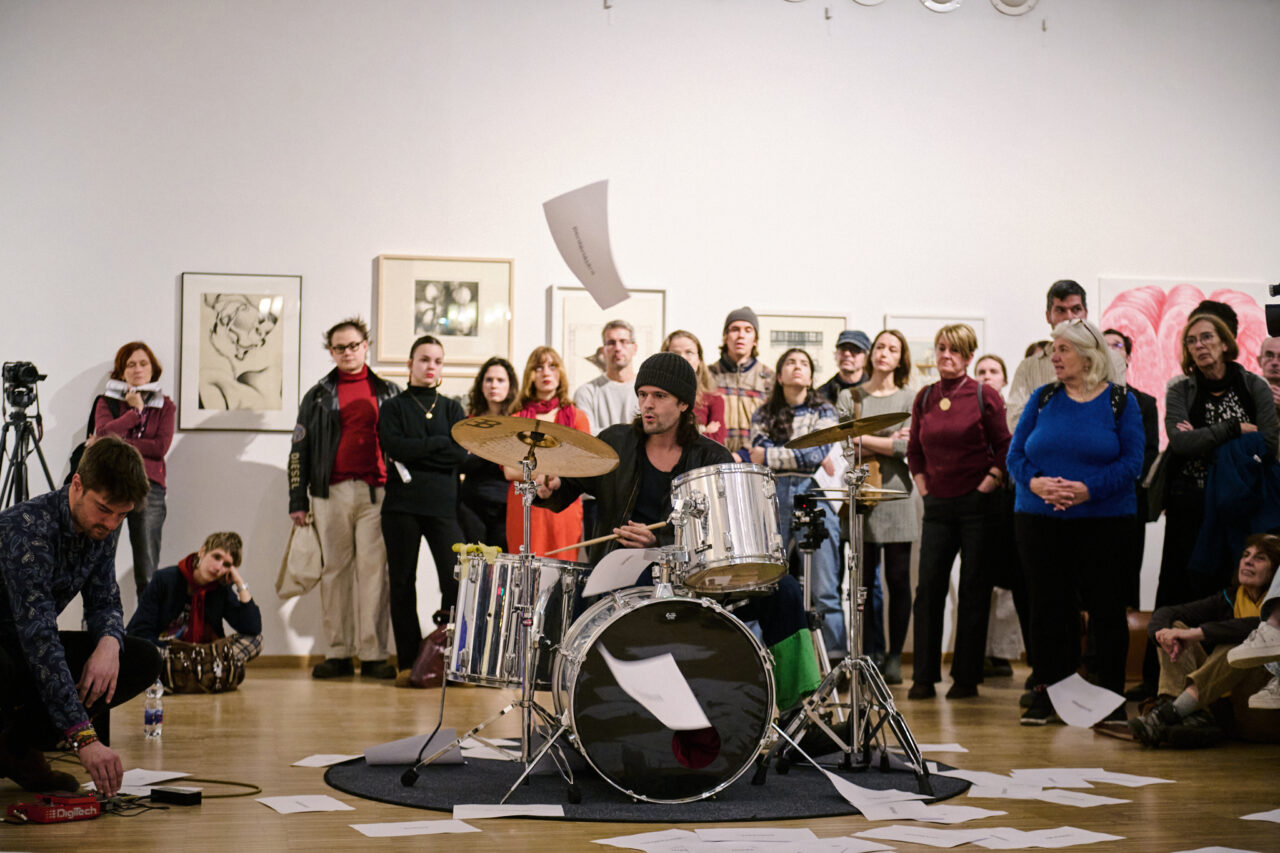
Performance, 25-min version
12. December 2025
Blinken OSA Archivum – Galeria Centralis, Budapest
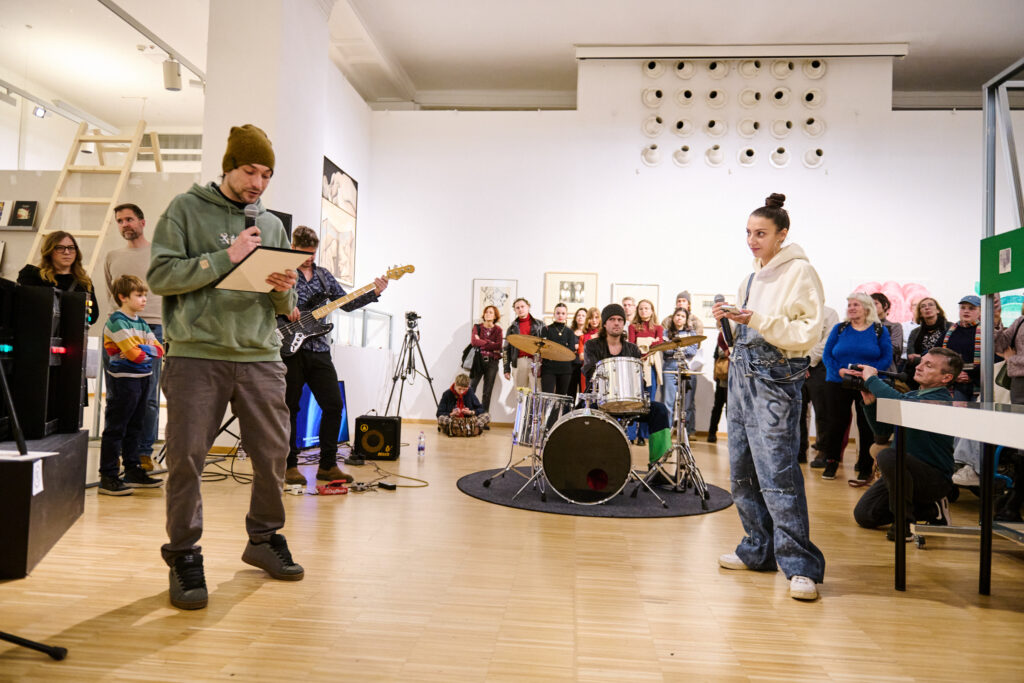
Developed and directed by: Hajnal Németh
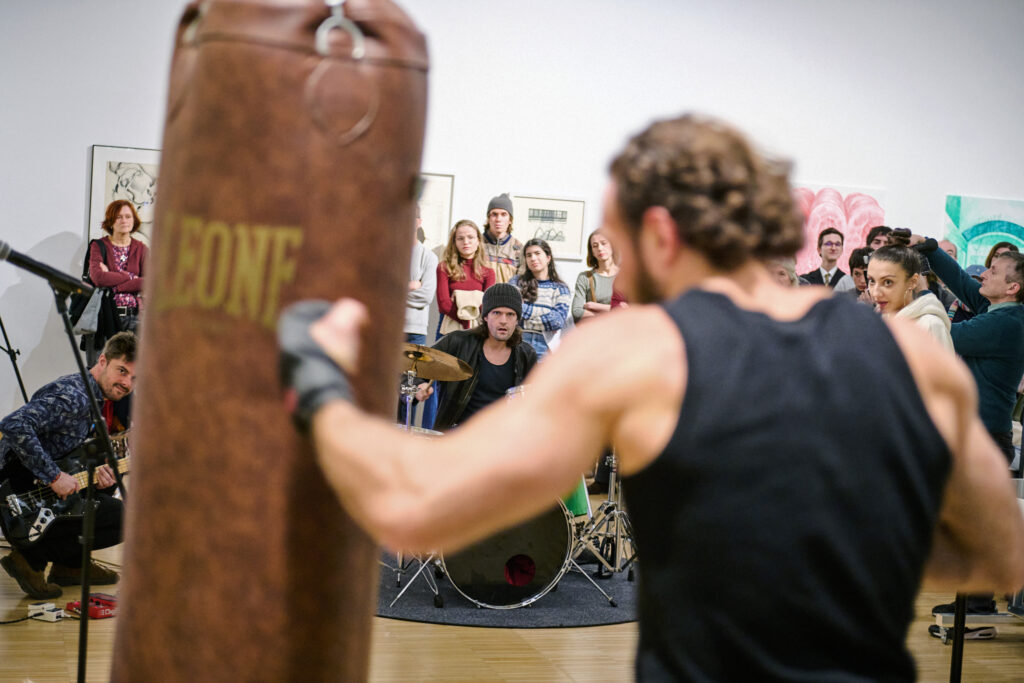
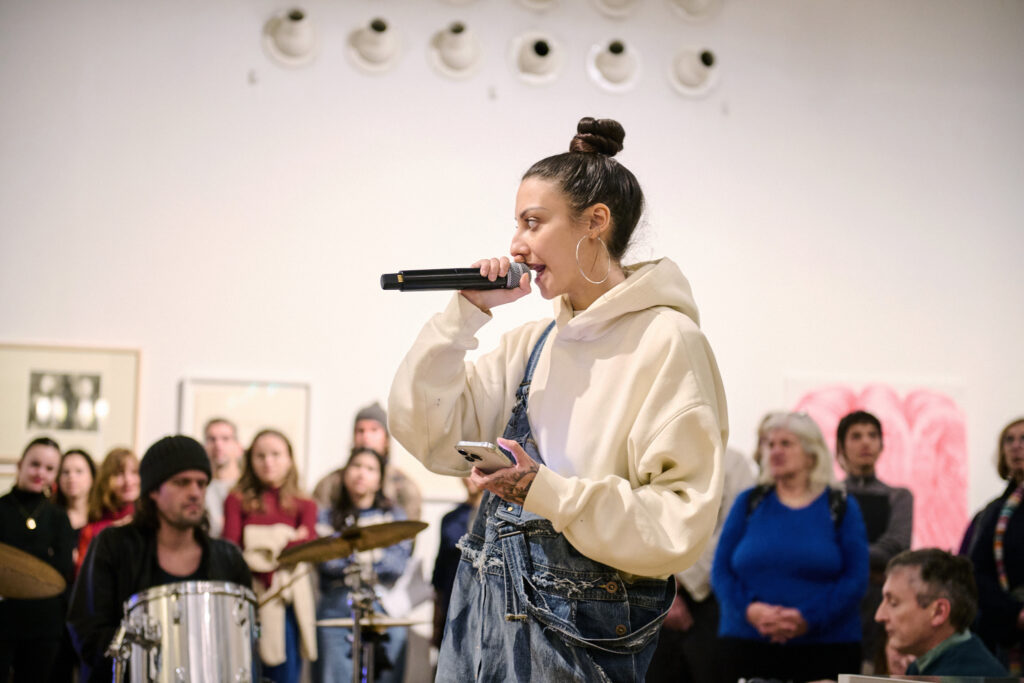
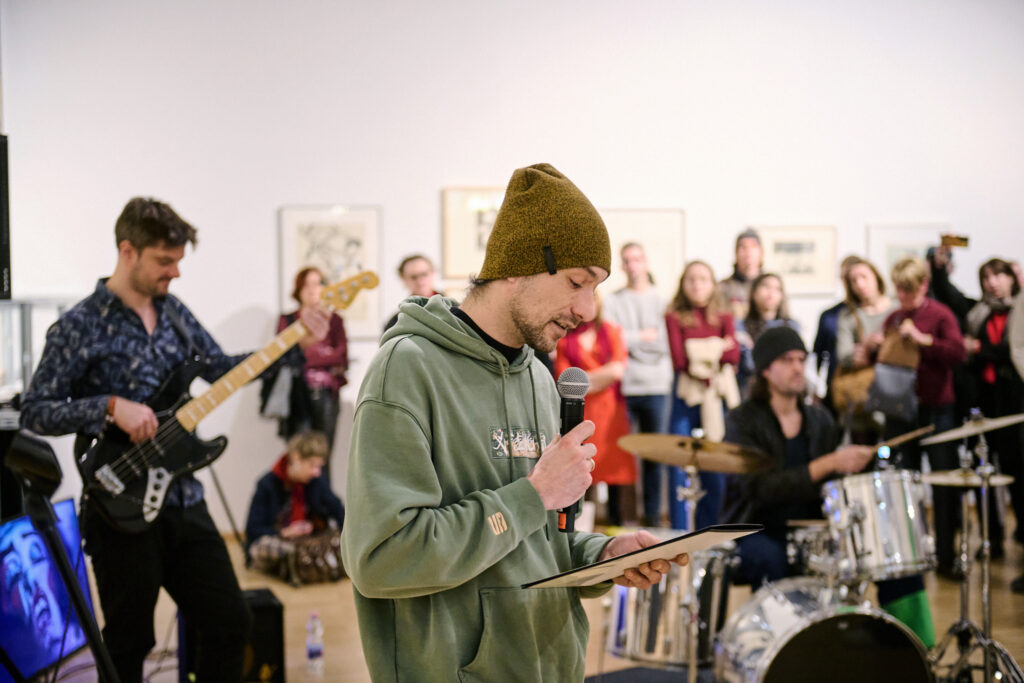
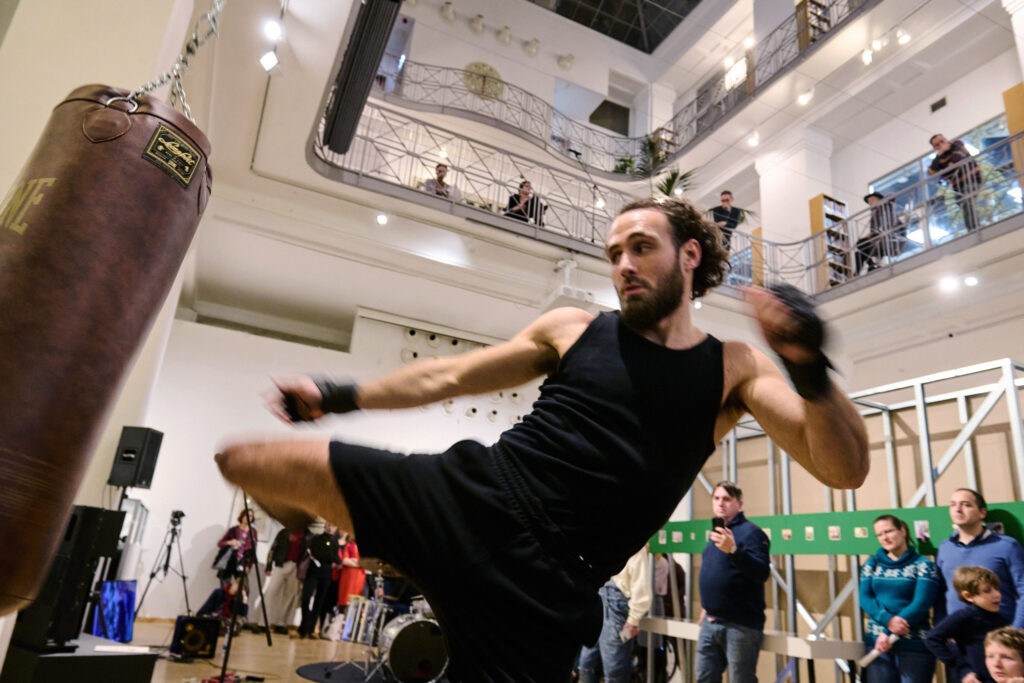
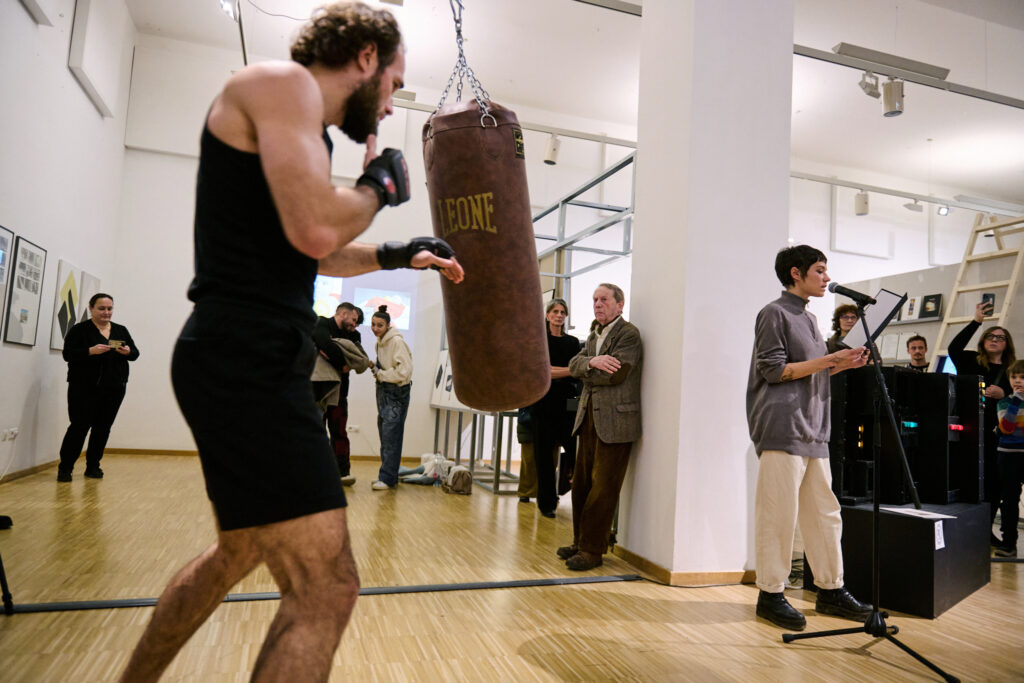
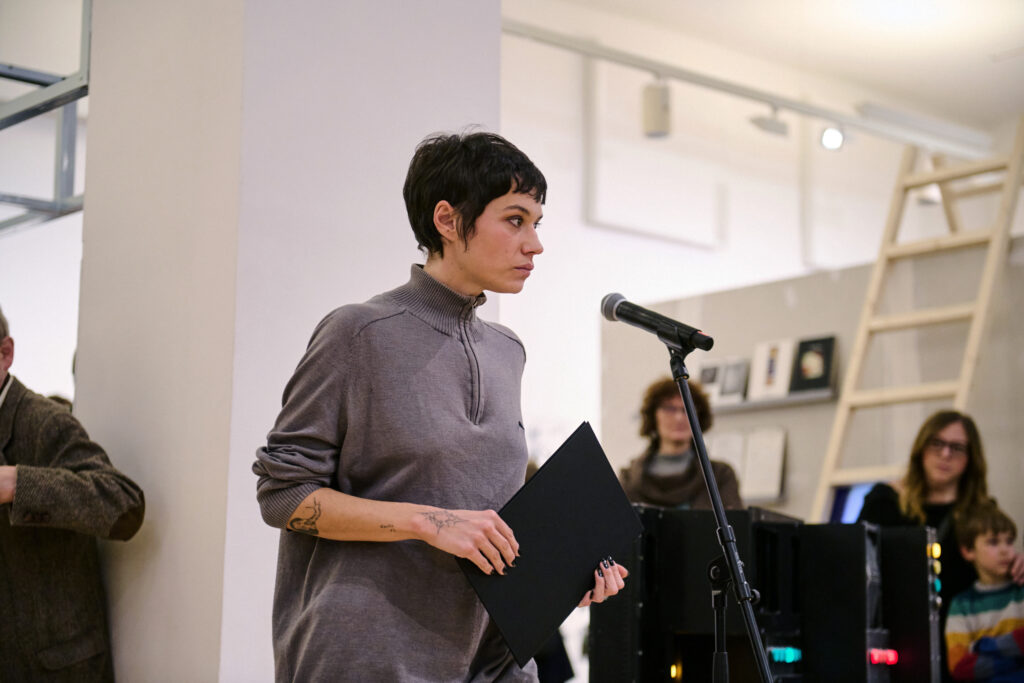
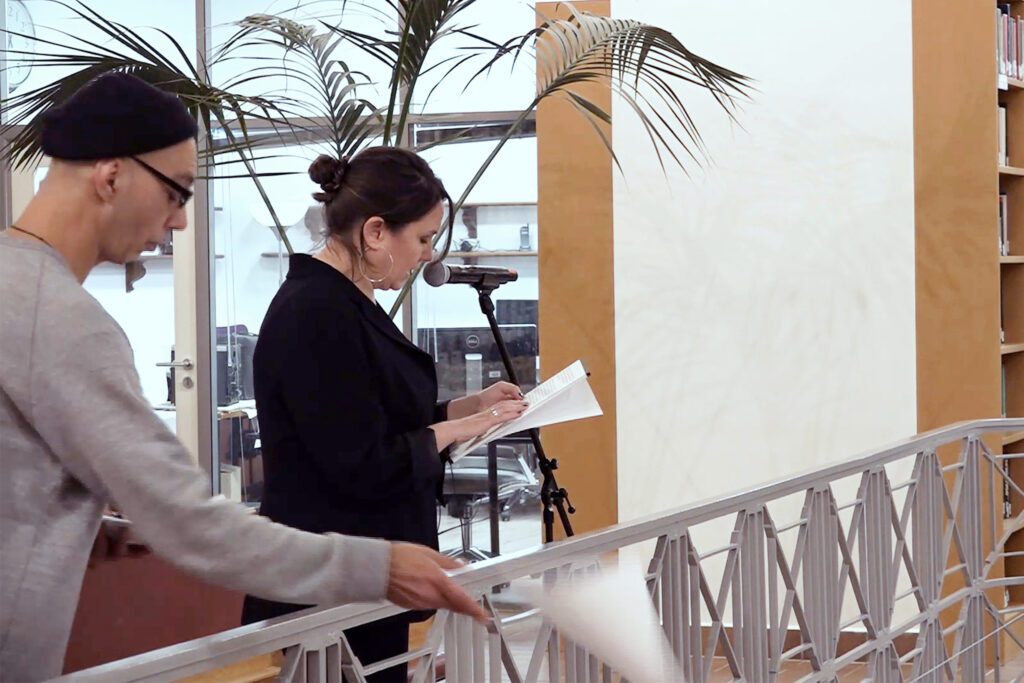
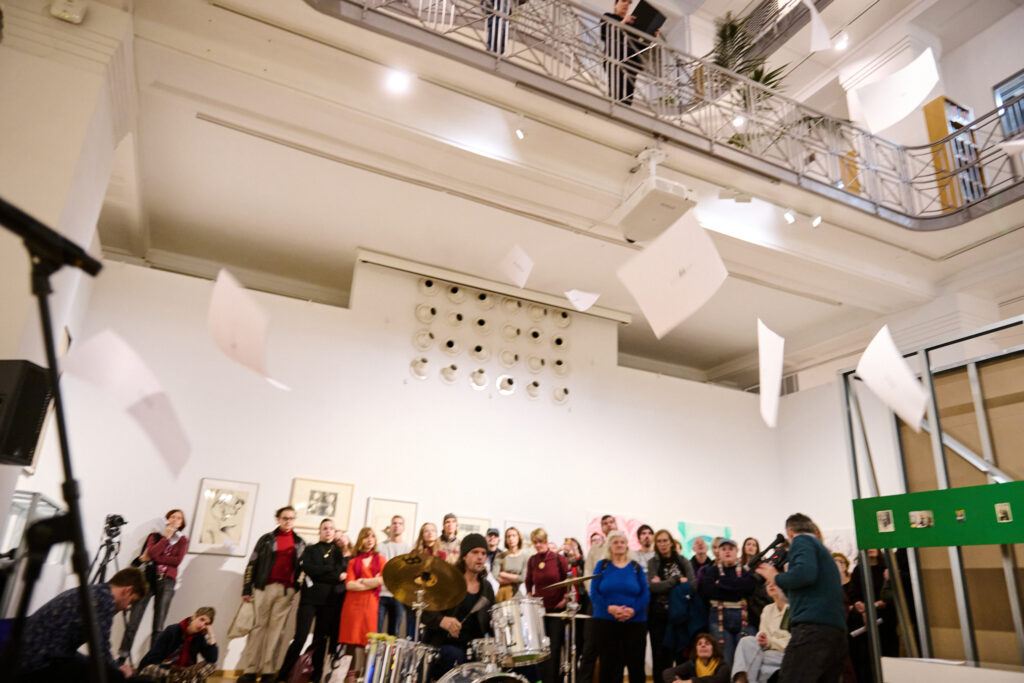
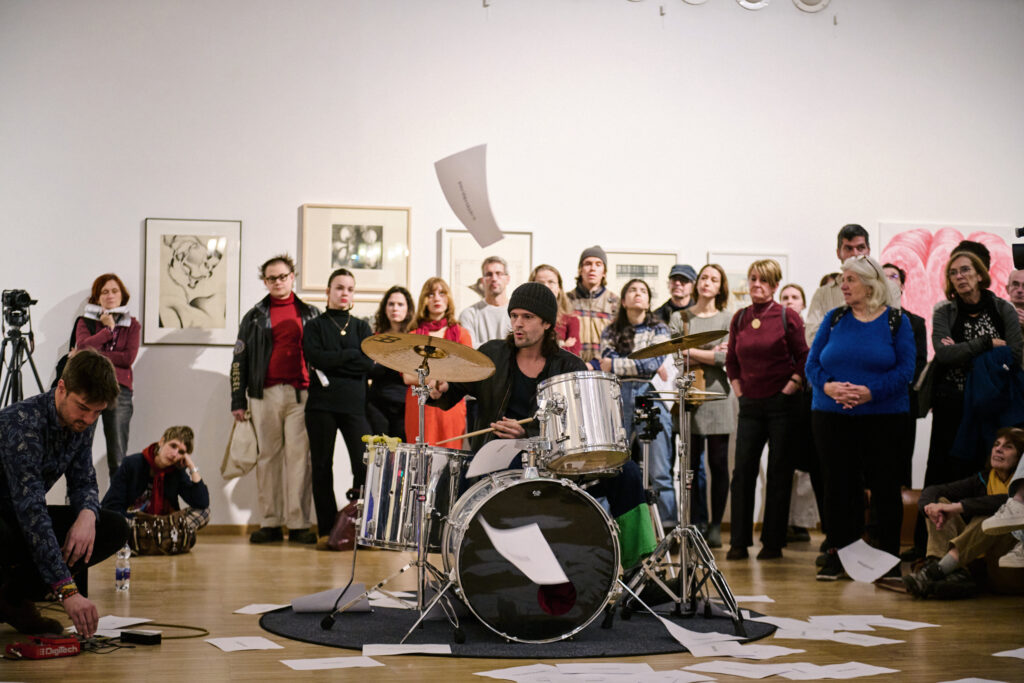
Performed by: Gábor Balázs (bass), Mark Ballyk (drums), Vanda Bukovinszky – Distress (rap), Dominik Bereczki (thai box), Dóra Csernátony, Dávid Oláh, Albert Orgon, Tímea Piróth (text interpretations)
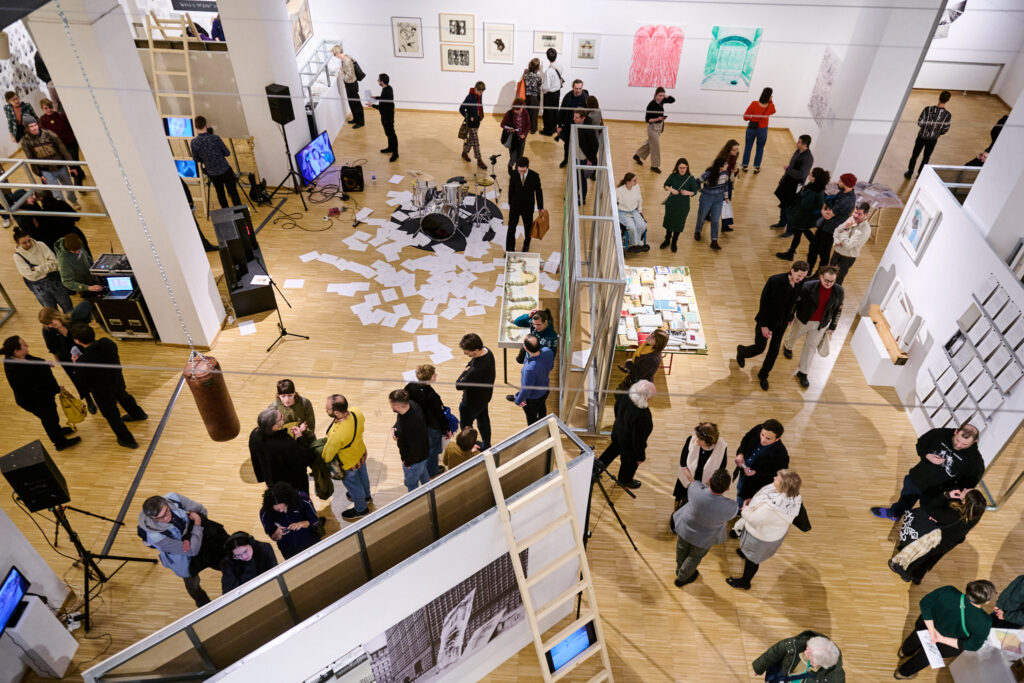
Performed at the opening event of the exhibition “Shifting Perspectives: If the Berlin Wind Blows My Flag. The Story of a West Berlin Fellowship.”, curated by Nóra Lukács and Melanie Roumiguiére
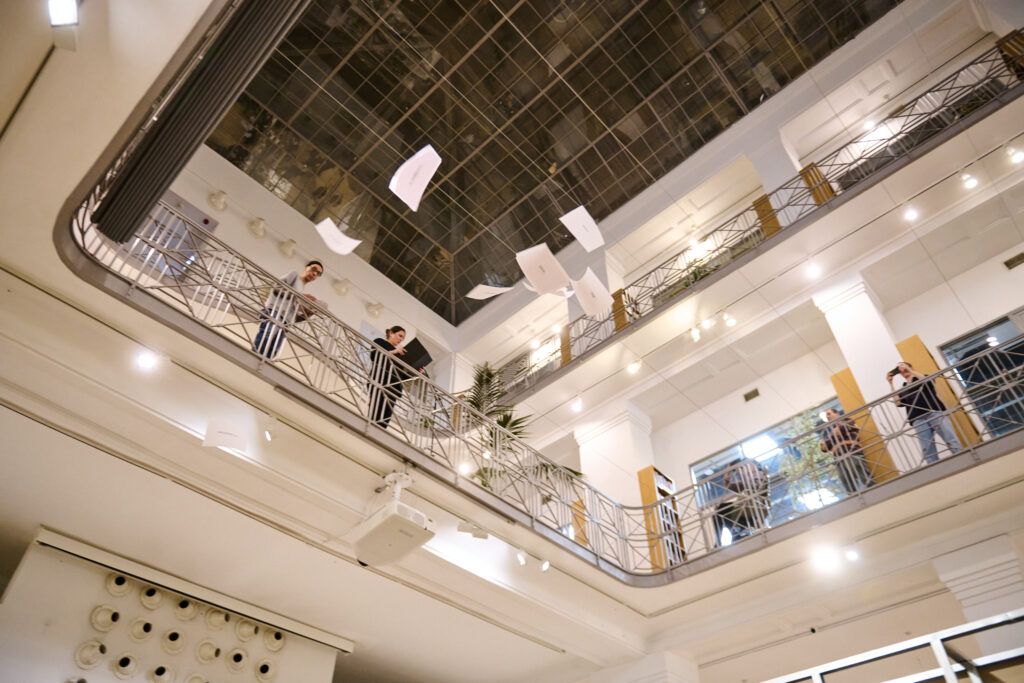
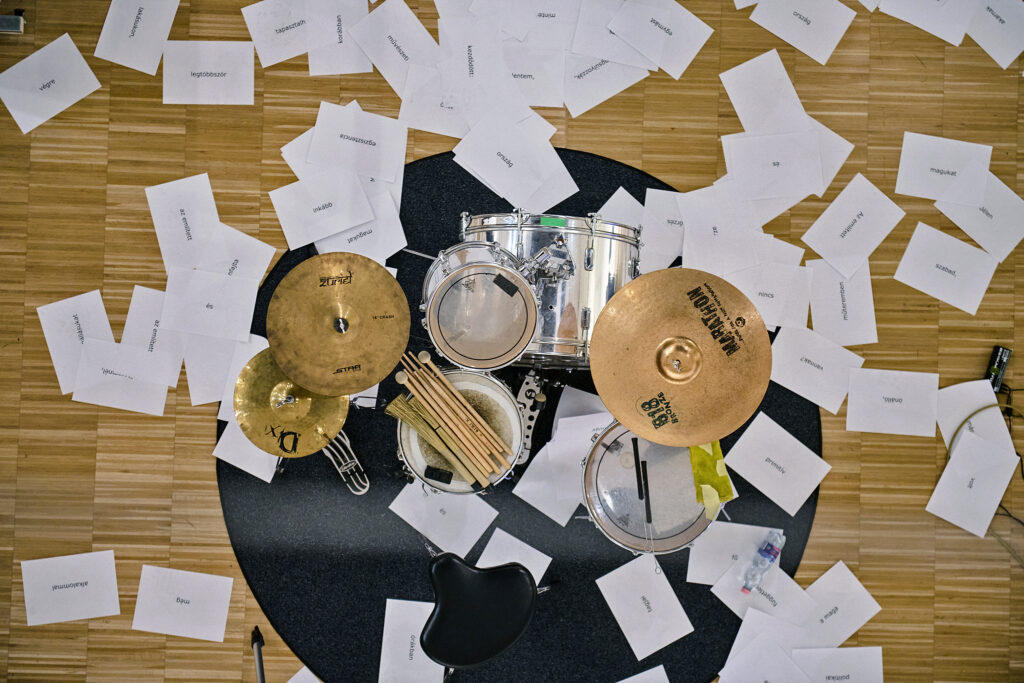
Freedom Trap (2023–) is a performance in a “counter-concert” format combining musical, rhythmic, and vocal elements. Bringing together performers from diverse fields, it stages two interrelated texts: a reinterpretation of Tibor Hajas’s Freedom Industry Broadcast, Channel IV (1973), followed by excerpts from secret-agent and police reports documenting his 1973 performance in Balatonboglár and the context of the Chapel Studio.
As Hajas’s text gains renewed resonance through a contemporary rap interpretation, the archival reports gradually disintegrate. By translating a historical example into the present, the work reflects on the relativity and illusion of freedom within authoritarian systems.
◾️
“What kind of country has no capital?
Underdeveloped? Inferior? And if it has more than one? Or if it is always relocated?”
(Tibor Hajas “Freedom Industry Broadcast, Channel IV.”, 1973)
◾️
“Loads of questions, words stifled,
I say everything that shouldn’t be said.
What kind of country is capital-less?
You love yours, still move somewhere else.”
(Vanda Bukovinszky – Distress, “Loads of Questions,” rap lyrics, 2025)
◾️
“I hereby report that we have been informed on several occasions by associate police authorities that young people, who consider themselves artists and are opposed to the officially supported artistic tendencies, are holding exhibitions in the already mentioned studio.”
(Report of the Somogy County Police Headquarters III/III Department dated August 22, 1973.)
◾️
The performance was supported by the Goethe-Institut Budapest and Péter Barta.
Photos by Zoltai András / Blinken OSA Archivum.